Hospitality

Create the perfect guest experience in your hotel with energy-efficient upgrades.
U.S. hotels spend almost $4 billion a year on energy costs, and that energy expense is the fastest-growing operating cost in the industry. The Sponsors of Mass Save offer financial incentives to make energy efficiency projects a reality so that businesses can start saving money, reduce greenhouse gas emissions, and improve comfort for staff and guests.

Key Energy-Saving Opportunities

The following studies may be a good starting point to evaluate cost and energy savings for your Hospitality sector facility.

  • Portfolio Prioritization Plan: The Portfolio Prioritization Plan is a quick, high-level analysis designed to assess energy usage and building system performance for a set of facilities within your building portfolio.
    LEARN MORE

  • Scoping Study: During a scoping study, an Energy Expert evaluates all facility areas and systems like building controls, insulation, heating and cooling equipment, lighting and more to identify energy-saving opportunities.
    LEARN MORE

  • Comprehensive Business Assessment: Comprehensive Building Assessments take a deeper dive into energy savings and reducing a building’s carbon emissions with electrification and energy efficiency measures.
    LEARN MORE

  • Focused Study: Focused Studies provide precise cost, savings and emissions impact estimates for selected energy efficiency or decarbonization measures, along with documentation required to complete a Mass Save custom incentive application.
    LEARN MORE
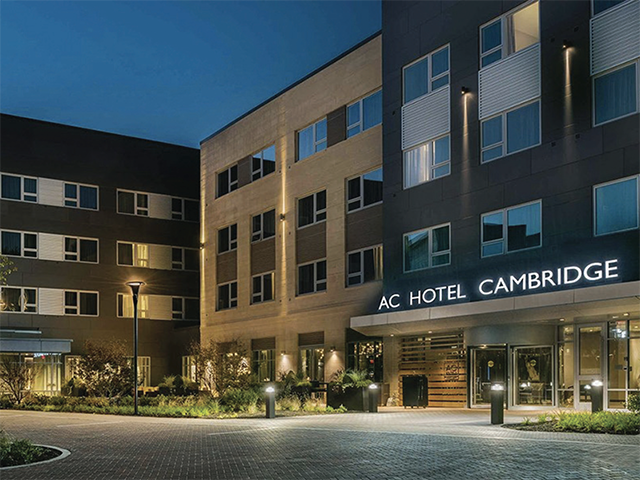

1. Efficient Lighting Design
Energy-efficient lighting can provide better aesthetics for your hotel and save energy. Indoor and outdoor LED lighting and controls use light and energy more efficiently, saving money and energy. LED lightbulbs are long-lasting and require fewer changes, freeing up maintenance time.

Learn More
2. Water Heating Upgrades
Hot water is used every day in a hotel, and it’s a cost that can add up quickly. Upgrade to higher efficiency systems to lower heating expenses, decrease equipment maintenance time, and lower greenhouse gas emissions.


Learn More
3. Vending Misers
Vending machines typically use electricity 24 hours a day, even if no one is around to use them. Vending misers use motion sensors to automatically power vending machines down when the surrounding area is unoccupied and power them back up when a person approaches the machine.

Learn More
4. Laundry Equipment Upgrades
The time and cost it can take a hotel to do laundry can seem daunting. Ozone systems and new, high-speed clothes washers have greater capacity and reduced drying times, meaning less money spent on energy. High-efficiency laundry equipment can use up to 50 percent less energy and water than conventional systems.

Learn More

Not Sure Where To Start?

If you’re looking for advice on how to save energy, the Sponsors of Mass Save offer energy assessments and guidance to support efficiency projects from start to finish.

Learn More